
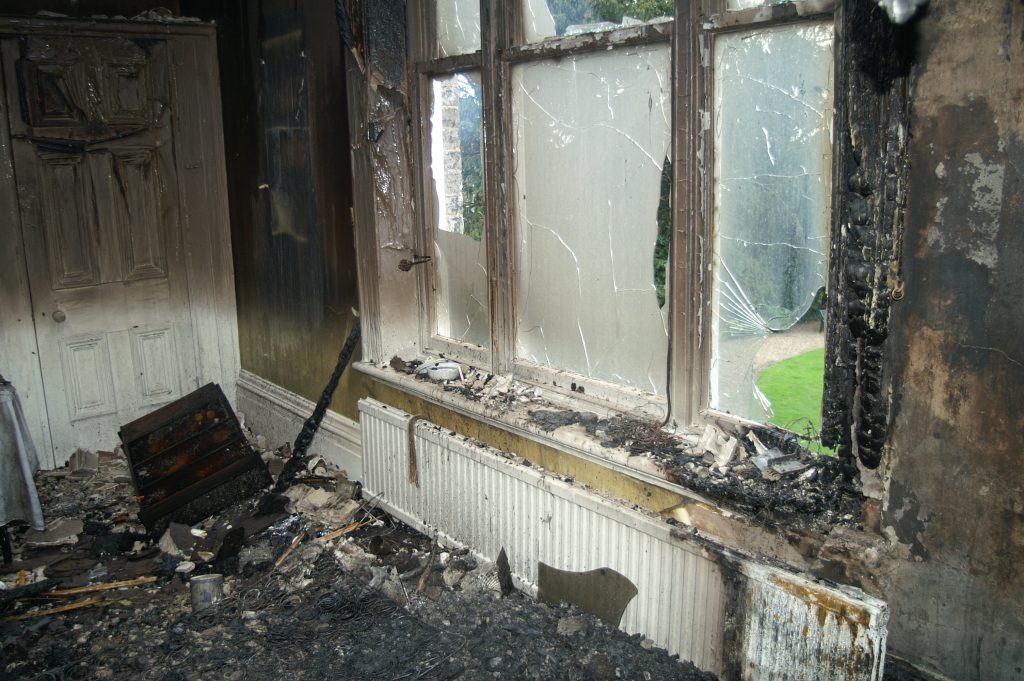
A candle left burning in an empty room can escalate from a small flame to a significant structural fire in minutes. When that happens, one of the first questions Pennsylvania and New Jersey homeowners ask is whether their insurance policy will actually pay — or whether an unattended candle fire puts their coverage at risk. Understanding how unattended candle fire insurance coverage works, and where your policy draws the line, can make a real difference in how your claim is handled from the very first call.
Does Homeowners Insurance Cover Fire Caused by Negligence?
The short answer is: it depends on the degree of negligence involved. Most standard homeowners insurance policies do cover accidental fires — including many fires that result from everyday oversights like leaving a candle unattended. However, the moment an insurer begins investigating your claim, they will be looking closely at the circumstances surrounding the fire to determine whether it crosses into what is legally defined as gross negligence.
Understanding where your claim falls on that spectrum is critical before you file — and before you speak with your insurance company’s adjuster.
What Counts as Ordinary Negligence in a Fire Claim
Ordinary negligence refers to a failure to exercise reasonable care — the kind of mistake most people could see themselves making. Forgetting to blow out a candle before leaving a room, or falling asleep while one was still burning, generally falls into this category. In most cases, homeowners insurance covers fire caused by negligence at this level because the incident was unintentional and not the result of reckless disregard for safety.
PA and NJ insurers typically treat these claims as covered losses under the dwelling and personal property provisions of a standard HO-3 policy — provided the rest of your policy terms are met.
What Counts as Gross Negligence — and Why It Matters
Gross negligence is a higher threshold. It refers to conduct that shows a conscious disregard for an obvious risk — behavior that goes beyond a simple mistake. In the context of a candle fire, examples might include leaving multiple candles burning unattended near curtains or bedding, repeatedly ignoring fire hazards after a prior incident, or leaving the home for an extended period with candles actively burning.
If your insurer determines the fire resulted from gross negligence, they have grounds to deny the claim entirely. This distinction — between an honest oversight and reckless behavior — is often where coverage disputes begin, and it is not always a straightforward determination.
How Insurers Evaluate the Line Between the Two
Insurance companies do not make this determination casually. After a fire, the insurer will send their own adjuster to investigate the cause and origin of the fire. They will review fire department reports, interview household members, and assess the physical evidence. Their goal is to document the circumstances accurately — but keep in mind that their adjuster works on behalf of the insurance company, not you.
If there is any ambiguity in how the fire started or how long the candle was left unattended, that ambiguity can be used to characterize the incident as gross negligence rather than an accident. This is precisely why thorough documentation and professional representation matter from the very beginning of the claims process.
Homeowners Insurance Fire Exclusions That Could Affect Your Candle Fire Claim
Even when a fire is clearly accidental, there are specific homeowners insurance fire exclusions that can reduce or eliminate your coverage. Knowing these before you file gives you a clearer picture of what to expect — and helps you avoid statements or mistakes that could trigger a denial.
Gross Negligence and Intentional Acts
As covered above, gross negligence is one of the most commonly cited homeowners insurance fire exclusions in disputed claims. Intentional acts are an absolute exclusion — no standard policy covers a fire that was deliberately set by the policyholder or any household member. If an investigation determines the fire was intentional, the claim will be denied and the matter may be referred for fraud investigation.
For candle fires specifically, the intentional act exclusion rarely applies. The greater risk is the gross negligence characterization, which is why the facts surrounding the incident need to be documented carefully and presented accurately.
Vacancy and Unoccupied Home Exclusions
Most homeowners policies include a vacancy clause that suspends or limits coverage if the home has been unoccupied for 30 to 60 consecutive days, depending on the policy terms. If a candle fire occurs in a home that was vacant at the time — whether due to travel, a second property, or a home being listed for sale — the insurer may cite this exclusion to deny or limit the claim.
This is a commonly overlooked homeowners insurance fire exclusion that catches policyholders off guard, particularly in situations involving rental properties or extended absences.
Lack of Maintenance and Code Violations
If your home has known fire hazards — outdated wiring, a smoke detector that was not functioning, or a chimney that had not been cleaned — your insurer may argue that these conditions contributed to the fire spreading. Under Pennsylvania and New Jersey policy standards, insurers can point to deferred maintenance as a contributing factor in a fire loss, which can reduce the payout or support a partial denial.
This does not mean your claim will automatically be denied, but it does mean the insurer has additional leverage during the adjustment process. Keeping up with routine maintenance and having working smoke detectors throughout your home is not just a safety measure — it is a practical protection for your coverage.
Policy Lapse or Coverage Gaps
A policy that has lapsed due to missed premium payments provides no coverage, regardless of the cause of the fire. Similarly, if your coverage limits have not been updated to reflect the current replacement cost of your home and contents, you may find that a paid claim still leaves a significant gap between what the insurer pays and what it actually costs to rebuild or replace.
Reviewing your policy annually — particularly your dwelling coverage limits and personal property schedules — is one of the most straightforward ways to protect yourself before a loss ever occurs.
What to Do Immediately After a Candle Fire in Your Home
How you respond in the hours and days following a candle fire directly affects the outcome of your claim. PA and NJ homeowners who document thoroughly and follow the right steps from the start are in a significantly stronger position when the insurer’s adjuster arrives.
Contact Alliance Adjustment Group Before You Call Your Insurer
This is the most important step most homeowners skip. What you say in your first conversation with your insurance company becomes part of the claim record — and an offhand comment about how long the candle was burning or whether you were home at the time can be used to frame the incident as gross negligence rather than an accident.
At Alliance Adjustment Group, we advise homeowners to reach out to us first, before making that initial call to their insurer. Our team helps you understand what your policy covers, how to present the facts of the loss accurately, and what documentation you will need to support a complete claim. Getting representation in place early is one of the most effective ways to protect your unattended candle fire insurance coverage from the start.
Document Everything Before Cleanup Begins
Before any restoration or cleanup work begins, photograph and video every area of damage — walls, ceilings, floors, personal belongings, and structural elements. Do this even in areas where the damage appears minor. Smoke and soot damage often extends well beyond the point of origin, and insurers do not always account for the full scope without thorough visual documentation.
Create a written inventory of damaged or destroyed personal property, including approximate values and any available receipts or serial numbers. The more complete your documentation, the harder it is for an insurer to dispute the extent of the loss.
Preserve the Scene and Obtain the Fire Report
Do not discard damaged items or begin major repairs until the insurer has completed their inspection — and ideally until you have your own representation in place. Disposing of evidence, even unintentionally, can complicate the claims process.
Request a copy of the fire department report as soon as it is available. This report documents the origin and cause of the fire as determined by responding firefighters, and it is one of the foundational documents in any fire claim. Under Pennsylvania’s claims handling regulations at 40 P.S. § 1171.5, your insurer is required to acknowledge your claim within 15 days and issue a coverage decision within 30 days of receiving all documentation. In New Jersey, N.J.A.C. 11:2-17 requires acknowledgment within 10 working days and a coverage decision within 30 days of complete documentation. Knowing these timelines helps you hold your insurer accountable.
Understand Your Additional Living Expenses Coverage
If the fire makes your home temporarily uninhabitable, your policy’s loss of use or additional living expenses (ALE) coverage may pay for hotel stays, meals, and other costs while your home is being repaired. This coverage is often underutilized because homeowners are not aware it exists or do not know how to document eligible expenses properly.
Keep all receipts for temporary housing, food, laundry, and other costs above your normal living expenses. Submit them as part of your claim. If your insurer is slow to release ALE funds, that is another area where having a public adjuster in your corner can move the process forward.
Frequently Asked Questions
Will my homeowners insurance cover a candle fire if I was not home when it started?
Being away from home when a candle fire starts does not automatically void your coverage, but it does complicate the claim. Insurers will look closely at how long you were gone and whether leaving candles burning unattended in an empty home constitutes gross negligence under your policy terms. If the home was not vacant for an extended period — meaning 30 to 60 days depending on your policy — the vacancy exclusion likely does not apply. However, the circumstances surrounding the fire will still be evaluated carefully, which is why having a public adjuster involved early in the process helps ensure the facts are presented accurately and completely.
What should I do if my fire claim is denied due to negligence?
A public adjuster fire claim denial is not necessarily the final word. If your insurer has denied your claim on the basis of negligence or gross negligence, you have the right to dispute that determination. In Pennsylvania, policyholders have recourse under 42 Pa. C.S. § 8371, which addresses bad faith handling of insurance claims. In New Jersey, the Homeowners Bill of Rights provides additional protections against improper claim denials. At Alliance Adjustment Group, we review denied fire claims to determine whether the insurer’s characterization of the loss is supported by the evidence — and where it is not, we build the case for reconsideration.
How do homeowners insurance fire exclusions affect a partial loss versus a total loss?
Homeowners insurance fire exclusions apply regardless of whether the fire caused partial or total damage. If an exclusion is cited — such as gross negligence, a lapsed policy, or a vacancy clause violation — it can result in a denial of the entire claim, not just the portion of the loss that relates to the exclusion. In partial loss situations, exclusions can also be used to limit the scope of what the insurer agrees to repair or replace. This is one of the reasons a thorough policy review before filing — and professional representation during the adjustment process — matters so much in any fire claim, large or small.
Alliance Adjustment Group Is Here to Help With Your Fire Claim
A candle fire can happen in seconds, but the claims process that follows can stretch on for weeks — and the decisions you make early on have a direct impact on the outcome. From understanding unattended candle fire insurance coverage to navigating a public adjuster fire claim denial, having the right team in your corner from the start makes a measurable difference.
At Alliance Adjustment Group, we work exclusively on behalf of policyholders — not insurance companies. Our licensed public adjusters serve homeowners throughout Pennsylvania and New Jersey, handling every stage of the fire claims process: documentation, policy review, insurer communication, and dispute resolution. If your claim has been denied, underpaid, or is simply taking longer than it should, we are ready to review your situation and help you understand your options.
There are no fees unless we recover money on your behalf.
Alliance Adjustment Group
435 N Main St, Doylestown, PA 18901
Call: (267) 880-3000
Reach out today to speak with a member of our team — no obligation, just answers.
Disclaimer: The information provided in this article is for general informational purposes only and does not constitute legal or insurance advice. Insurance policies, regulations, and claim procedures vary by carrier, policy terms, and state. Laws referenced are current as of the date of publication but are subject to change. For guidance specific to your situation, consult with a licensed public adjuster, insurance professional, or attorney.