
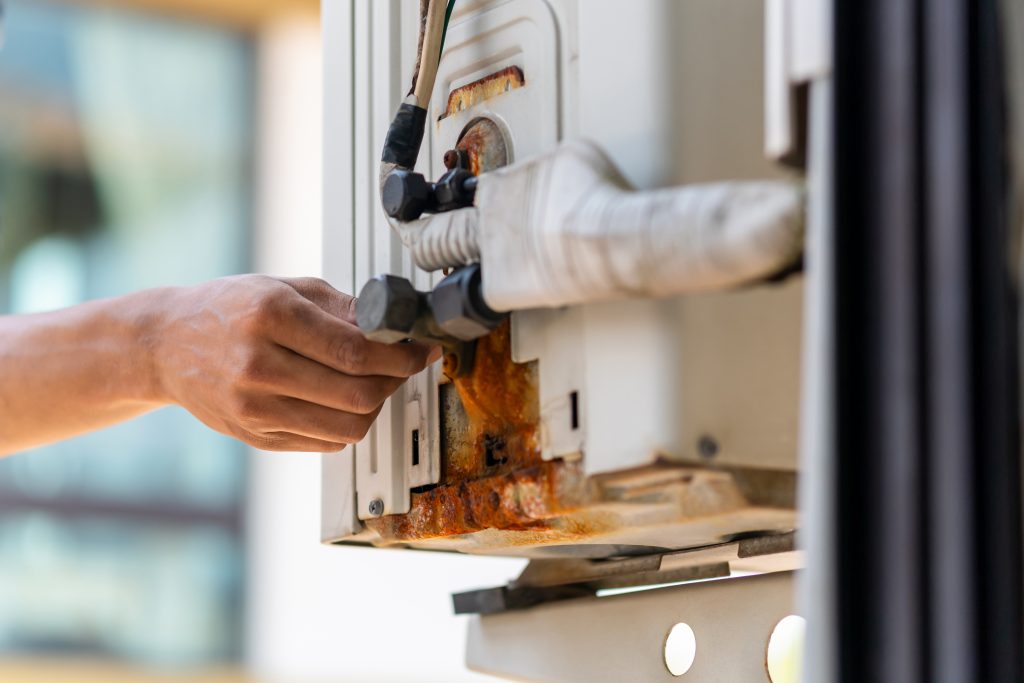
Water damage from an HVAC system is one of the most misunderstood claims in residential insurance — and one of the most frequently underpaid. When a condensate drain backs up and water spreads across your floors, soaks into your drywall, or seeps into a finished basement, the question homeowners face almost immediately is whether their policy actually covers it. Understanding how insurers evaluate an HVAC condensate drain overflow insurance claim is the first step toward protecting what you’re owed.
When an HVAC Condensate Drain Overflows, the Damage Can Spread Fast
Most homeowners don’t notice an HVAC condensate drain overflow right away. The first sign is usually something subtle — a water stain on the ceiling below an air handler, soft spots in the flooring near an indoor unit, or a musty smell coming from a closet where the HVAC system lives. By the time the damage is visible, water has often already moved into wall cavities, subfloor material, or adjacent rooms.
That’s what makes this type of water damage particularly costly. An HVAC condensate drain overflow insurance claim isn’t just about the puddle on the floor — it’s about everything the water touched before anyone realized there was a problem. In Pennsylvania and New Jersey homes, where central air systems often run hard through humid summers, condensate lines can clog quickly and overflow without any obvious warning signs.
The damage pattern is also deceptive. Because water follows the path of least resistance, a leak originating at a second-floor air handler can show up as ceiling damage in a first-floor room, or travel along framing into areas that seem completely unrelated to the HVAC unit. Homeowners who only document what’s immediately visible often leave significant damage out of their claim — and insurers rarely volunteer to look further.
What Is an HVAC Condensate Drain and Why Does It Overflow?
Every central air conditioning and heat pump system produces condensation as part of the cooling process. As warm air passes over the evaporator coil, moisture is pulled from the air and drips into a drain pan, which then channels water out of the home through a condensate drain line. Under normal conditions, this happens continuously and invisibly throughout the cooling season.
When any part of that system fails, water has nowhere to go — and it finds its own path.
Clogged Condensate Drain Line
The most common cause of an HVAC condensate overflow is a blocked drain line. Algae, mold, dust, and debris accumulate inside the line over time, eventually restricting or fully blocking the flow of water. When the line is blocked, the drain pan fills and overflows — sometimes slowly over days, sometimes rapidly depending on humidity levels. This is a mechanical failure of the drainage system, not evidence that the homeowner neglected the unit.
Cracked or Corroded Drain Pan
The drain pan sits directly beneath the evaporator coil and is the first line of defense against water escaping the system. Over time, pans can develop hairline cracks, rust through at the bottom, or warp from temperature cycling. A compromised drain pan can leak even when the drain line is completely clear — making it a less obvious source of water damage that often goes undetected longer than a clogged line.
Failed Condensate Pump
In systems where the drain line cannot rely on gravity — basement installations and certain attic-mounted units — a condensate pump moves water out of the pan and up through the drain line. When that pump fails mechanically, water accumulates in the pan and overflows onto whatever surface is below. Pump failures are sudden, discrete mechanical events with a clear cause and a specific point of failure.
Why the Cause Matters for Your Insurance Claim
Each of these failure mechanisms shares an important characteristic: they are identifiable, mechanical failures — not the result of a homeowner ignoring an obvious problem. That distinction matters significantly when an insurer evaluates water damage coverage after an HVAC leak. Policies that cover sudden and accidental water damage treat these failures very differently than gradual leaks attributed to deferred maintenance, and the cause documented by your HVAC technician can directly affect whether your claim is approved or denied.
Does Homeowners Insurance Cover HVAC Condensate Leak Water Damage?
The answer depends on one critical distinction that runs through nearly every residential water damage claim: whether the damage was sudden and accidental or the result of a gradual condition that went unaddressed.
Standard homeowners insurance policies in Pennsylvania and New Jersey are written to cover unexpected losses — events that happen without warning and that the homeowner could not reasonably have prevented. A condensate pump that fails overnight, a drain pan that cracks without prior visible deterioration, or a drain line that clogs during a particularly humid stretch of weather can all qualify as sudden and accidental events under a standard policy.
What Is Typically Covered
When an HVAC condensate leak is determined to be sudden and accidental, the resulting water damage to your home’s structure is generally what the policy responds to. That includes:
- Water damage to drywall, ceilings, and wall framing
- Damage to flooring — hardwood, laminate, tile, and subfloor material
- Damage to insulation inside wall or ceiling cavities
- Personal property damaged by the overflow, subject to your policy’s personal property limits
Water damage coverage after an HVAC leak typically addresses what the water did to your home — not the HVAC system itself.
What Is Typically Not Covered
The HVAC unit, drain pan, condensate pump, or drain line that failed is almost never covered under a standard homeowners policy. Mechanical breakdown of equipment is a separate coverage category, typically excluded from homeowners insurance and addressed instead through a home warranty or equipment breakdown endorsement if the homeowner carries one.
This is a distinction that causes significant confusion at the claims stage. Homeowners sometimes assume that because the water damage is covered, the repair or replacement of the unit must be as well. Insurers are not obligated to correct that assumption.
Why Insurance Companies Deny HVAC Condensate Overflow Claims
Even when a homeowner has a legitimate claim, denials on HVAC water damage are common. Understanding the most frequent grounds for denial helps you anticipate what an insurer’s adjuster will be looking for — and how to counter it.
The Neglect Argument
The most common denial basis for an HVAC condensate drain overflow insurance claim is neglect. An insurer’s adjuster may argue that the overflow resulted from a lack of routine maintenance — that the drain line showed visible buildup, that the drain pan had been corroding for an extended period, or that the system had not been professionally serviced in years. Under that framing, the damage is categorized as gradual rather than sudden, which places it outside standard policy coverage.
This argument is not always made in good faith, and it is not always accurate. A drain line can clog rapidly under the right humidity and air quality conditions. A drain pan can crack without any prior visible warning. The burden of characterizing the failure as gradual typically falls on the insurer’s adjuster — but without documentation on your side, that characterization can be difficult to challenge.
The Gradual Damage Exclusion
Most standard homeowners policies contain explicit language excluding coverage for damage that developed over weeks or months. Insurers will look for physical evidence of long-term water exposure — staining patterns that suggest repeated saturation, warping that indicates prolonged moisture contact, or mold growth at a stage that implies an extended timeline. If the adjuster’s report leans on any of these observations, the claim can be denied on gradual damage grounds regardless of what actually caused the overflow.
How Documented Maintenance Protects You
The most effective defense against a neglect-based denial is a documented maintenance history. Service records from a licensed HVAC technician showing annual inspections, drain line cleanings, and system checks establish that the homeowner took reasonable care of the system. When those records exist, it becomes significantly harder for an insurer to characterize a failure as the predictable result of neglect.
At Alliance Adjustment Group, we regularly see claims where the homeowner had maintained their system responsibly but had no paperwork to show for it. Going forward, keeping receipts and service records for every HVAC maintenance visit is one of the simplest ways to protect your water damage coverage after an HVAC leak.
When to Push Back on a Denial
A denial is not a final answer. If your claim has been denied on neglect or gradual damage grounds and you believe the failure was sudden and mechanical, you have the right to dispute that determination. In Pennsylvania, 40 P.S. § 1171.5 gives policyholders clear procedural protections in the claims process. In New Jersey, N.J.A.C. 11:2-17 establishes similar rights. A written assessment from a licensed HVAC technician documenting the specific cause and mechanism of the failure is often the most important piece of evidence in a dispute.
Steps to Take After an HVAC Condensate Drain Overflow
How you respond in the hours and days immediately following an HVAC condensate overflow can have a direct impact on your claim. The steps below are specific to protecting both your property and your position with the insurer.
Step 1: Document Everything Before You Clean Up
Before moving furniture, pulling up wet flooring, or running a fan, photograph and video every area of visible damage. Capture the HVAC unit itself, the drain pan, the area directly below and around the unit, and any rooms where water has traveled. Get close-up shots of staining, warping, and saturated materials. Time-stamped photos establish the immediate condition of the property before any remediation begins — and that record matters when the insurer’s adjuster arrives.
Do not discard any damaged materials until the adjuster has had the opportunity to inspect them. Flooring, drywall sections, and insulation that get disposed of before documentation can become points of dispute later.
Step 2: Shut Off the System and Stop the Source
Once documentation is complete, turn off the HVAC system to stop additional water from entering the drain pan. If standing water is present and poses an immediate safety risk, address that — but keep a record of what was moved or removed and why.
Step 3: Call a Licensed HVAC Technician for a Written Assessment
This step is critical. Contact a licensed HVAC technician and request a written diagnosis that identifies the specific cause of the overflow — whether that is a clogged drain line, a failed condensate pump, a cracked drain pan, or another mechanical failure. That written assessment becomes the foundation of your HVAC condensate drain overflow insurance claim. It documents that the failure was mechanical and specific, not the result of general neglect.
Ask the technician to note the condition of the system at the time of the service call, including whether there was evidence of prior maintenance and whether the failure appeared sudden or gradual. A thorough written report from a qualified technician is one of the most valuable documents you can have when a claim goes to dispute.
Step 4: Contact Alliance Adjustment Group Before You Call Your Insurer
The moment you contact your insurance company, your claim has begun — and what you say in that first conversation can affect how the claim is framed from the start. Before you make that call, reach out to our team at Alliance Adjustment Group.
We can review your policy, help you understand what your water damage coverage after an HVAC leak actually includes, and make sure your documentation is complete before the insurer’s adjuster gets involved. A public adjuster working on your behalf from the beginning of the process is in a fundamentally different position than one brought in after a denial has already been issued.
Step 5: Begin Mitigation to Prevent Further Damage
Most homeowners policies require policyholders to take reasonable steps to prevent additional damage after a loss. This typically means extracting standing water, running dehumidification equipment, and beginning structural drying. Keep all receipts for mitigation services — these costs are often reimbursable under the policy’s coverage for reasonable mitigation expenses.
What Homeowners Get Wrong When Filing This Type of Claim
Filing a water damage claim after an HVAC condensate overflow seems straightforward — but several common missteps can weaken a claim significantly before a public adjuster or attorney ever gets involved.
Cleaning Up Before Documenting the Damage
The instinct to clean up immediately is understandable. Wet floors and water-stained ceilings are stressful to look at, and the concern about mold growth is legitimate. But removing or drying out damaged materials before the insurer’s adjuster has inspected them — or before you have thorough photo and video documentation — creates gaps in the record that are difficult to fill later.
An adjuster who arrives to find a freshly dried and patched area has no way to assess the original scope of the damage. In those situations, the burden shifts to the homeowner to prove what was there — and without documentation, that is a difficult position to be in.
Calling the Insurer Before Understanding Your Policy
Most homeowners call their insurance company first, before reviewing their policy or consulting anyone else. That impulse is natural, but it means the claim framing starts with the insurer’s intake process rather than with the homeowner’s own understanding of their coverage.
Knowing what your policy actually says about sudden water damage, gradual damage exclusions, and equipment breakdown before you file gives you a clearer picture of what to document, what to emphasize, and what questions to ask. It also helps you avoid inadvertently volunteering information that could be used to support a denial.
Assuming the Whole Claim Will Be Handled Uniformly
An HVAC condensate leak produces at least two distinct categories of potential loss: the water damage to your home’s structure and contents, and the repair or replacement of the HVAC system itself. These are evaluated separately under most policies. The fact that your insurer accepts one part of the claim does not mean the other will be handled the same way — and accepting a partial settlement without understanding what was excluded can close out a claim before its full scope is recognized.
Missing Secondary and Hidden Damage
Water that overflows from a condensate drain pan does not stay where it lands. It moves into subfloor material, travels along floor joists, wicks into drywall, and — given enough time — creates conditions for mold growth. Homeowners who only document and claim the surface damage visible at the time of discovery frequently miss the secondary damage that develops or is uncovered during remediation.
A thorough inspection of the affected area — including subfloor, wall cavities, and any adjacent spaces — should be part of every HVAC condensate drain overflow insurance claim. At Alliance Adjustment Group, a complete scope of damage is one of the first things our team establishes before any documentation goes to the insurer.
Accepting the First Settlement Offer Without Review
An initial settlement offer reflects the insurer’s adjuster’s assessment of the loss — not necessarily a complete accounting of everything your policy covers. Accepting it without independent review, particularly on a claim that involves hidden or secondary water damage, can mean leaving covered losses uncompensated. You have the right to request a detailed breakdown of how the settlement figure was calculated and to dispute items you believe were underpaid or excluded in error.
How a Public Adjuster Can Help With an HVAC Water Damage Claim
When an HVAC condensate leak produces significant water damage, the claims process involves more moving parts than most homeowners expect — policy interpretation, damage scoping, documentation standards, and insurer communication all happening at the same time, while you’re also dealing with repairs and displacement.
At Alliance Adjustment Group, we work exclusively for the policyholder — not the insurance company. Here is what that looks like in practice:
- Policy review — We read your policy before you file, so you understand exactly what your water damage coverage after an HVAC leak includes and what exclusions may apply
- Damage scoping — We inspect the full affected area, including hidden and secondary damage that a surface-level review can miss
- Documentation — We compile the photographic evidence, written assessments, and supporting materials needed to present a complete and well-supported claim
- Claim preparation — We handle the paperwork and communication with your insurer, so nothing is misstated or omitted in the initial filing
- Dispute support — If your HVAC condensate drain overflow insurance claim is denied or underpaid, we can help you understand your options and build a case for reconsideration
Our team is licensed in Pennsylvania, New Jersey, New York, Delaware, Georgia, South Carolina, and Florida.
Frequently Asked Questions
Does homeowners insurance cover mold from an HVAC condensate leak?
It depends on how the mold is characterized. If mold growth is a direct result of a covered sudden and accidental water loss — such as an HVAC condensate leak that qualifies under your policy — some policies will include mold remediation as part of the covered loss. However, many standard policies contain specific mold sublimits or exclusions, particularly when the mold is determined to have developed over an extended period. Review your policy’s mold language carefully before assuming it is included in your water damage claim.
What is the difference between a covered and a non-covered HVAC leak?
The determining factor is almost always whether the damage was sudden and accidental or gradual and preventable. A condensate pump that fails mechanically overnight, a drain pan that cracks without prior visible deterioration, or a drain line that clogs rapidly during a high-humidity period are examples of sudden failures that may qualify for coverage. A drain line with years of visible buildup, a pan that had been visibly rusting, or a system with no maintenance history are situations where an insurer is more likely to characterize the damage as gradual and deny the claim.
Will filing an HVAC water damage claim raise my premiums?
Filing any claim carries the potential for a premium adjustment at renewal, and water damage claims are no exception. That said, Pennsylvania law does not permit an insurer to cancel a homeowners policy solely on the basis of claim frequency. In New Jersey, the Homeowners Bill of Rights provides similar protections against non-renewal based on claims history alone. Whether to file is a decision that depends on the scope of the damage, your deductible, and your specific policy terms — a conversation worth having before you contact your insurer.
Protecting Your Home Starts With Knowing Your Coverage
An HVAC condensate drain overflow can go from a minor inconvenience to significant structural damage faster than most homeowners expect — and the claims process that follows is rarely as simple as submitting a few photos and waiting for a check. The difference between a fully compensated claim and a denied one often comes down to documentation, timing, and a clear understanding of what your policy actually covers.
If you are dealing with water damage from an HVAC condensate leak in Pennsylvania or New Jersey, Alliance Adjustment Group is here to help. Our team has worked with homeowners across Bucks County, Montgomery County, Burlington County, and beyond — and we understand how local insurers evaluate these claims and what it takes to present one effectively.
We work for you — not your insurance company. If you have questions about your water damage coverage after an HVAC leak, want a policy review before you file, or need support on a claim that has already been denied, reach out to our team today.
Visit us: 435 N Main St, Doylestown, PA 18901
Call: (267) 880-3000
No obligation. Just answers.
Disclaimer: The information provided in this article is for general informational purposes only and does not constitute legal or insurance advice. Insurance policies, regulations, and claim procedures vary by carrier, policy terms, and state. Laws referenced are current as of the date of publication but are subject to change. For guidance specific to your situation, consult with a licensed public adjuster, insurance professional, or attorney.